Turning raw tables into a scored, production-ready model is the core skill behind the SAS A00-406 exam, the certification test for SAS Viya Supervised Machine Learning Pipelines from SAS. It leads to the SAS Certified Specialist: Machine Learning Using SAS Viya credential, and it measures whether you can drive the full modeling workflow inside Model Studio rather than simply recall theory. This guide breaks down what the exam validates, how its three domains are weighted, which algorithms appear, and how candidates prepare. If you build predictive models and want a vendor credential that proves practical pipeline skills, the A00-406 sits squarely at that intersection of data preparation, model building, and deployment.
Table of Contents
- What Does the SAS A00-406 Certification Actually Validate?
- SAS A00-406 Exam Format and Key Facts
- How Is the A00-406 Syllabus Weighted Across Three Domains?
- How Do You Build a Supervised Learning Pipeline in Model Studio?
- Which Algorithms Does the Supervised Machine Learning Exam Cover?
- How Are Models Assessed and Deployed in SAS Viya?
- Who Should Take the SAS A00-406 Exam?
- What Career Roles and Salaries Does This Certification Support?
- How Should You Prepare for the A00-406 Exam?
- Frequently Asked Questions
- Conclusion
What Does the SAS A00-406 Certification Actually Validate?
The SAS A00-406 certification validates that you can build, assess, and deploy supervised machine learning pipelines in SAS Viya using Model Studio. It confirms practical command of data preparation, algorithm selection, model comparison, and deployment rather than textbook knowledge. Passing earns the SAS Certified Specialist: Machine Learning Using SAS Viya credential, signalling to employers that you can move a project from raw input data to a registered, published model.
Supervised learning means training on labelled data, where each record carries a known target value. The exam focuses on that setting: classification and regression tasks where the goal is predicting an outcome from input features. SAS designed the test around Model Studio, the visual pipeline environment inside SAS Viya, so the skills map directly to daily work rather than to a scripting console.
Because it is a specialist credential, the A00-406 assumes you already understand analytics basics. It rewards candidates who can reason about overfitting, variable selection, and honest assessment while operating the actual nodes that carry out those tasks. That focus on applied judgement is what separates it from purely conceptual data science exams.
SAS A00-406 Exam Format and Key Facts
The SAS A00-406 exam runs for 90 minutes and contains 50 to 55 questions, with a passing score of 62 percent. It costs 180 USD and is delivered through Pearson VUE. SAS describes the items as multiple choice and short-answer questions, bases the exam on SAS Viya 4.0, and sets the credential to expire after five years. Knowing these parameters early helps you pace practice sessions and set a realistic study timeline before you sit the SAS Viya Supervised Machine Learning Pipelines test.
The recommended preparation track is the Machine Learning Using SAS Viya course, which mirrors the tasks the exam assesses. The table below summarises the core specifications so you can plan without hunting through scattered pages.
| Specification | Detail |
|---|---|
| Exam name | SAS Viya Supervised Machine Learning Pipelines |
| Exam code | A00-406 |
| Credential | SAS Certified Specialist: Machine Learning Using SAS Viya |
| Duration | 90 minutes |
| Questions | 50 to 55 |
| Passing score | 62 percent |
| Price | 180 USD |
| Delivery | Pearson VUE |
| Question types | Multiple choice and short answer |
| Platform version | SAS Viya 4.0 |
| Credential validity | 5 years |
| Recommended training | Machine Learning Using SAS Viya |
Working through a set of realistic A00-406 practice questions is the fastest way to confirm you can apply these facts under time pressure rather than just memorise them.
How Is the A00-406 Syllabus Weighted Across Three Domains?
The A00-406 syllabus is organised into three domains: Data Sources at 30 to 36 percent, Building Models at 40 to 46 percent, and Model Assessment and Deployment Models at 24 to 30 percent. Building Models carries the heaviest weight, so algorithm knowledge and node operation should absorb most of your study time, while data preparation and deployment split the remainder.
Each domain maps to a distinct stage of the modeling lifecycle. Data Sources covers everything that happens before an algorithm runs, Building Models covers the algorithms themselves, and the final domain covers proving a model works and pushing it to production. The table sets out the official weightings.
| Domain | Weighting | Focus |
|---|---|---|
| Data Sources | 30 to 36 percent | Projects, pipelines, data import, transformation, variable selection |
| Building Models | 40 to 46 percent | Trees, ensembles, neural networks, SVM, interpretability |
| Model Assessment and Deployment Models | 24 to 30 percent | Assessment, model comparison, holdout evaluation, deployment |
Because the weighting bands overlap, treat the higher end of each range as your planning target. A candidate who is strong across all three stages, rather than only in algorithm tuning, is far better positioned to clear the 62 percent bar comfortably.
How Do You Build a Supervised Learning Pipeline in Model Studio?
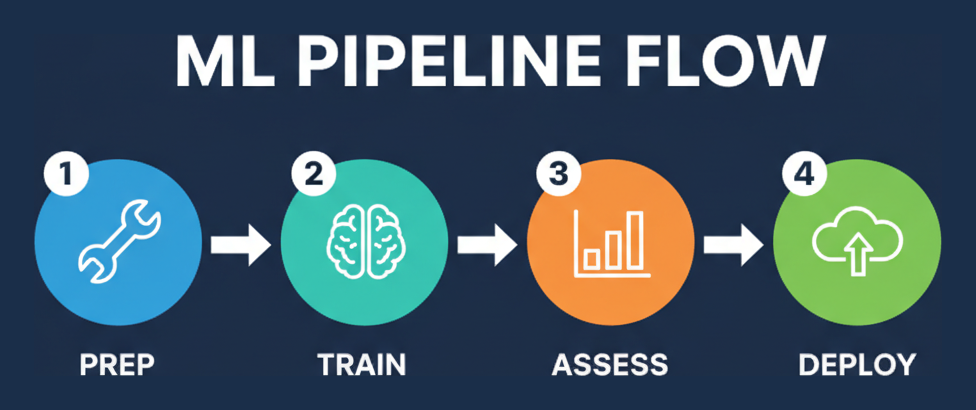
A supervised learning pipeline in Model Studio begins with a project that brings labelled data into SAS Viya, then chains preparation and modeling nodes into a repeatable flow. You start a project, import the data source, and either build a pipeline from the New Pipeline window or let Model Studio automatically generate one from a template. This visual approach is the backbone of the Data Sources domain.
Preparing the Input Data
Clean inputs decide model quality, so the exam expects you to handle missing values, distributions, and outliers before modeling. Key preparation tasks include:
- Setting a maximum percentage missing threshold to drop unreliable variables
- Applying replacement, transformation, imputation, and filtering to fix data problems
- Using the Transformation node to correct skewed variable distributions and outliers
- Preparing unstructured text with the Text Mining node when relevant
Selecting the Right Variables
Feeding every column into a model invites noise and overfitting. The Variable Selection node identifies the inputs that genuinely drive the target, trimming the feature set before an algorithm runs. Candidates who can explain why variable selection improves both accuracy and interpretability tend to handle these questions well. For a related SAS modeling skill set, the SAS predictive modeling path reinforces many of the same preparation habits.
Which Algorithms Does the Supervised Machine Learning Exam Cover?
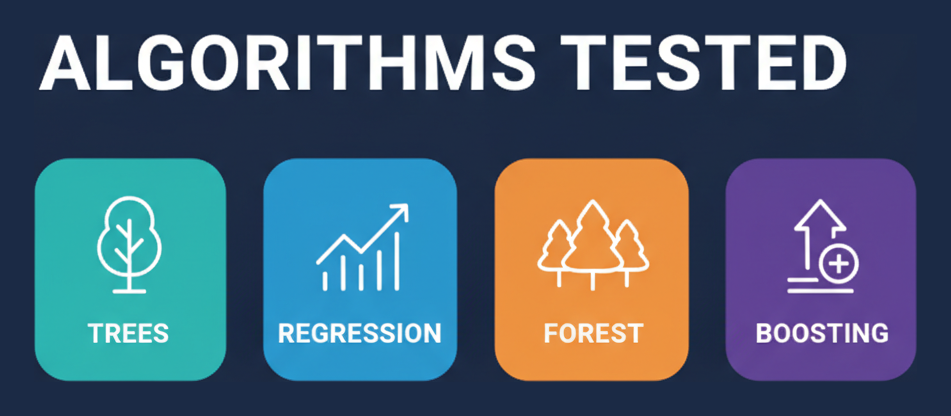
The A00-406 exam covers decision trees, ensembles of trees, neural networks, and support vector machines, plus the core concepts of overfitting, underfitting, and model selection. This Building Models domain is the largest, so you must know both the theory of each algorithm and the specific Model Studio node that builds it. The exam pairs conceptual understanding with hands-on node operation.
Tree-Based and Ensemble Models
Tree methods dominate practical machine learning because they handle mixed data types and non-linear patterns well. The exam maps them to specific nodes:
- Decision Tree node for single interpretable trees
- Gradient Boosting node for sequential ensemble learning
- Forest node for bagged ensembles that reduce variance
Understanding why an ensemble often beats a single tree, and how gradient boosting internals combines weak learners, is central to this section.
Neural Networks and Support Vector Machines
Beyond trees, candidates build neural networks with the Neural Network node and grasp how weights and bias shape predictions. The exam also covers support vector machines through the SVM node. Because complex models can behave like black boxes, the syllabus adds Model Interpretability tools, including Local Interpretable Model-Agnostic Explanations plots, so you can explain individual predictions to stakeholders.
How Are Models Assessed and Deployed in SAS Viya?
Model assessment and deployment cover roughly 24 to 30 percent of the A00-406 exam and focus on proving a model works before it reaches production. You must explain the principles of assessment, compare models across dimensions such as training speed, application speed, tolerance, and clarity, and apply honest assessment using a holdout data set. These skills confirm a model generalises rather than memorises its training data.
Inside Model Studio, comparison happens through dedicated tools. The Model Comparison node ranks competing models within a pipeline, while the Pipeline Comparison tab evaluates results across entire pipelines. Together they help you choose a champion model on evidence rather than intuition.
Deployment is the final stage the exam tests. You register a model to make it a managed, versioned asset, then publish it so applications can call it for scoring. Candidates moving toward operationalisation often continue into a dedicated model lifecycle certification, which extends these deployment ideas into full ModelOps practice on the SAS Viya platform.
Who Should Take the SAS A00-406 Exam?
The SAS A00-406 exam suits data scientists, analysts, and modelers who already work with SAS Viya and want to prove supervised learning skills. It fits practitioners who build predictive models in Model Studio and need a recognised credential to validate that experience. Because it is a specialist exam, it assumes working familiarity with analytics concepts rather than starting from zero.
Good candidates typically include analytics professionals moving from reporting into predictive work, statisticians adopting the Viya visual pipeline workflow, and developers supporting model deployment. If your role touches feature engineering, algorithm selection, or model scoring on the SAS Viya platform, this certification aligns closely with your daily tasks.
It is a weaker fit for absolute beginners with no exposure to statistics or SAS tooling. Those candidates usually benefit from foundational programming or applied statistics training first, then return to A00-406 once the core concepts feel natural.
What Career Roles and Salaries Does This Certification Support?
The A00-406 certification supports roles such as machine learning specialist, data scientist, predictive modeler, and analytics consultant. SAS remains widely used in banking, insurance, healthcare, and government, so a Viya machine learning credential carries weight in analytics-heavy industries where model governance and reproducibility matter. It signals that you can deliver models these regulated sectors trust.
Compensation varies by region and experience, so compare current local listings rather than relying on a single headline figure. The official Machine Learning Specialist page confirms the credential stays valid for five years, which gives you a long window to put it to work in job applications and reviews.
The credential also strengthens internal mobility. Professionals who prove they can build and deploy supervised models often move into senior modeling, MLOps, or analytics leadership tracks, where the ability to operationalise machine learning is increasingly the differentiator.
How Should You Prepare for the A00-406 Exam?
Effective A00-406 preparation combines the official Machine Learning Using SAS Viya training with hands-on Model Studio practice and timed question sets. Because 40 to 46 percent of the exam sits in Building Models, weight your study toward algorithms and node operation, then round out data preparation and deployment. A structured plan keeps all three domains covered.
A practical study sequence looks like this:
- Complete the Machine Learning Using SAS Viya course to align with the exam blueprint
- Build several end-to-end pipelines in Model Studio, from data import to deployment
- Practise each algorithm node until you can explain when to choose it
- Rehearse assessment and comparison using holdout data and the Model Comparison node
- Take timed practice questions and review every incorrect answer against the syllabus
Track your accuracy by domain rather than overall. If deployment questions lag, revisit registering and publishing models until that gap closes. Consistent, domain-aware revision beats cramming for a hands-on specialist exam like this one.
Frequently Asked Questions
What is the SAS A00-406 certification?
The SAS A00-406 certification is the SAS Viya Supervised Machine Learning Pipelines exam. Passing it earns the SAS Certified Specialist: Machine Learning Using SAS Viya credential, which validates your ability to build, assess, and deploy supervised models in Model Studio.
How many questions are on the A00-406 exam?
The A00-406 exam contains 50 to 55 questions and runs for 90 minutes. You need a score of 62 percent to pass. The mix reflects the three syllabus domains, with the heaviest emphasis on building models.
How much does the SAS A00-406 exam cost?
The SAS A00-406 exam costs 180 USD and is delivered through Pearson VUE. Pricing can vary slightly by region and local taxes, so confirm the exact amount when you schedule your test appointment.
What are the three domains of the A00-406 syllabus?
The syllabus has three domains: Data Sources at 30 to 36 percent, Building Models at 40 to 46 percent, and Model Assessment and Deployment Models at 24 to 30 percent. Together they span the full modeling lifecycle in SAS Viya.
Which algorithms does the A00-406 exam test?
The exam tests decision trees, forests, gradient boosting, neural networks, and support vector machines. It also covers model interpretability, overfitting and underfitting concepts, and model selection, each tied to a specific Model Studio node.
Do I need programming skills to pass A00-406?
The exam centres on Model Studio, the visual pipeline environment, so heavy coding is not the focus. However, understanding analytics concepts and how each node behaves is essential. Practical experience building pipelines matters more than scripting ability.
Is the SAS A00-406 exam suitable for beginners?
It is a specialist exam, so it assumes prior familiarity with analytics and SAS tooling. Complete beginners usually benefit from foundational statistics or SAS Viya programming training first, then attempt A00-406 once core concepts feel comfortable.
How long does it take to prepare for A00-406?
Preparation time varies with experience, but candidates already using SAS Viya often need several weeks of focused study. Combining the official course with hands-on pipeline practice and timed question sets is the most reliable route to passing.
What is the difference between registering and publishing a model?
Registering a model turns it into a managed, versioned asset within SAS Viya. Publishing then makes that model available for applications to call for scoring. The A00-406 exam expects you to understand both deployment steps.
How long is the SAS Machine Learning Specialist credential valid?
SAS states that the certification expires after five years. The A00-406 exam behind it is based on SAS Viya 4.0, so keep an eye on the official credential page for any later exam version before you plan a renewal.
Conclusion
The SAS A00-406 certification proves something employers value: that you can carry a supervised machine learning project from raw data through model building to a deployed, scorable asset in SAS Viya. Its three domains reward balanced, hands-on skill, with the strongest emphasis on algorithms and Model Studio nodes. Prepare by combining the official Machine Learning Using SAS Viya course with repeated pipeline practice and honest, domain-aware self-assessment. When you are ready to test that readiness under exam conditions, working through targeted practice questions for the SAS Viya Supervised Machine Learning Pipelines exam is the logical next step toward earning the credential.


