PTCA, the Linux Foundation PyTorch Certified Associate exam, is the first vendor-neutral PyTorch certification with a published blueprint, and it is not shaped the way most people expect. Anyone who has met the Linux Foundation through its Kubernetes exams assumes a terminal, a cluster and two hours of hands-on work. PTCA is not that. It is 60 multiple-choice questions in 120 minutes, and the weighting is equally surprising: PyTorch fundamentals carry 38% of the paper while model development, the part most engineers assume an ML exam is about, carries only 20%. Add performance and optimisation at 26% and you get a PyTorch certification that is far more interested in tensors, devices and execution speed than in architecture design. This article covers what each domain asks, what the format means for study, and who the credential genuinely helps.
What Is the PyTorch Certification?
The PyTorch Certified Associate credential, exam code PTCA, is the Linux Foundation’s associate-level certification for the PyTorch deep learning framework. It runs 60 questions in 120 minutes, requires 75% to pass, costs $250 USD, and carries no prerequisites. The credential is valid for two years.
The Linux Foundation is PyTorch’s governing foundation, which is what makes this credential different from a training provider’s certificate. It is not a course completion badge, and the objectives were written against the framework rather than against a curriculum.
Where it sits
PTCA is an associate credential, which in Linux Foundation terms means it validates working competence rather than expertise. It sits alongside the foundation’s other associate exams for cloud native and observability tooling, and details of the whole family are collected in our Linux Foundation certification hub.
A consolidated view of the credential’s objectives and format sits on the PyTorch Associate exam page.
Is PTCA Hands-On or Multiple Choice?
PTCA is an online proctored, multiple-choice exam. It is not performance based. That single fact overturns the assumption most candidates arrive with, because the Linux Foundation built its certification reputation on hands-on exams where you fix a broken cluster from a terminal.
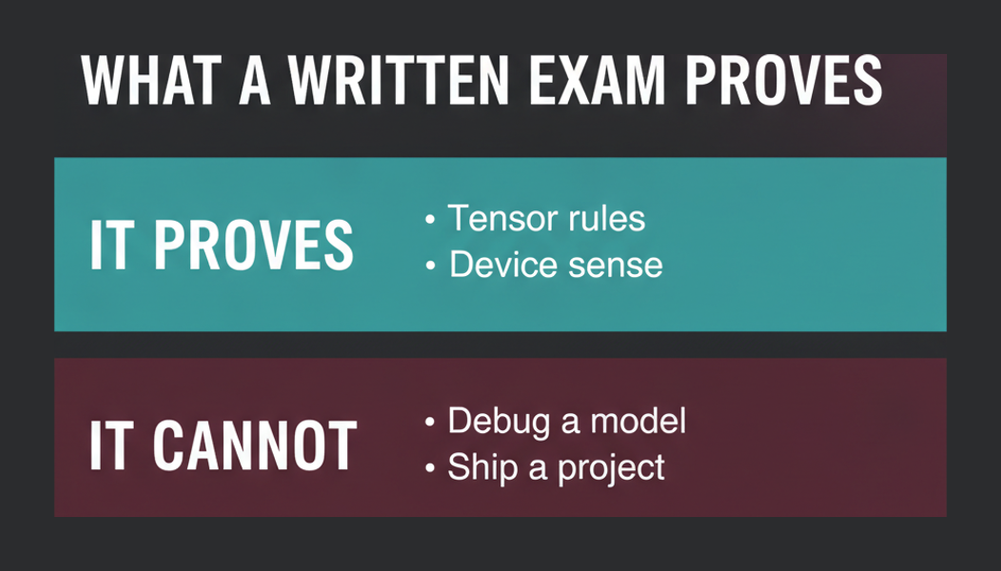
The practical consequence cuts both ways. Preparation is cheaper: you do not need a GPU rig or a lab environment to sit it, and you cannot fail because a command timed out. But it also means the exam cannot verify that you can build and debug a model end to end, and you should be honest with yourself about what the credential therefore proves.
What multiple choice does test well here
- Whether you know what a tensor operation actually does, rather than which incantation you usually copy.
- Whether you understand device placement well enough to predict where an error comes from.
- Whether you can reason about precision and execution choices instead of trying settings until one is faster.
- Whether you know what a DataLoader does behind the parameters you set.
Those are all real gaps in working practitioners, and a written exam catches them cleanly. The format is stated on the official PTCA page, along with the two year validity and the exam-only price.
What Is on the PTCA Exam?
PTCA splits across four domains, and the split is heavily front-loaded toward foundational and performance material. Fundamentals and performance together account for 64% of the paper. Model development and data handling, which candidates often assume dominate, share the remaining 36% between them.
| Exam detail | Value |
|---|---|
| Exam name | Linux Foundation PyTorch Certified Associate |
| Exam code | PTCA |
| Questions | 60 |
| Duration | 120 minutes |
| Passing score | 75% |
| Price | $250 USD, exam only |
| Format | Online proctored, multiple choice |
| Prerequisites | None |
| Validity | Two years |
The 75% pass mark on a 60 question paper means you can afford to lose 15 questions. Against the weighting below, that is roughly the whole data handling domain, which is the closest thing to a margin this exam offers.
| Domain | Weight | Objectives |
|---|---|---|
| PyTorch Fundamentals | 38% | Core concepts, tensors, training, testing and using models, device basics across CPU, CUDA and MPS |
| Performance and Optimization | 26% | Precision and execution optimisation, performance measurement, distributed training |
| Model Development | 20% | PyTorch neural network building blocks |
| Data Handling | 16% | Datasets, DataLoaders, transforms, training data |
Why Do Fundamentals Carry 38% of the Paper?
PyTorch fundamentals is the largest domain at 38% because it covers the layer everything else sits on: core concepts, tensors, the training and testing loop, and device basics. Get any of those wrong and every other answer becomes guesswork, which is why the blueprint gives it more weight than model development and data handling combined. Engineers who then deploy those models on AWS can look at the AWS AIP-C01 certification.
Tensors are the heart of it. Shape, dtype, broadcasting rules, in-place operations and the difference between a view and a copy are the kind of details working engineers absorb by trial and error and never formalise. A written exam asks them directly, which is exactly where practitioners with years of experience sometimes stumble.
Device basics deserve real attention
The objectives name CPU, CUDA and MPS explicitly. That means the exam expects you to know how tensors and modules move between devices, what happens when they do not, and why the most common runtime error in PyTorch is a device mismatch. Anyone who has only ever run on one machine with one accelerator should spend time here.
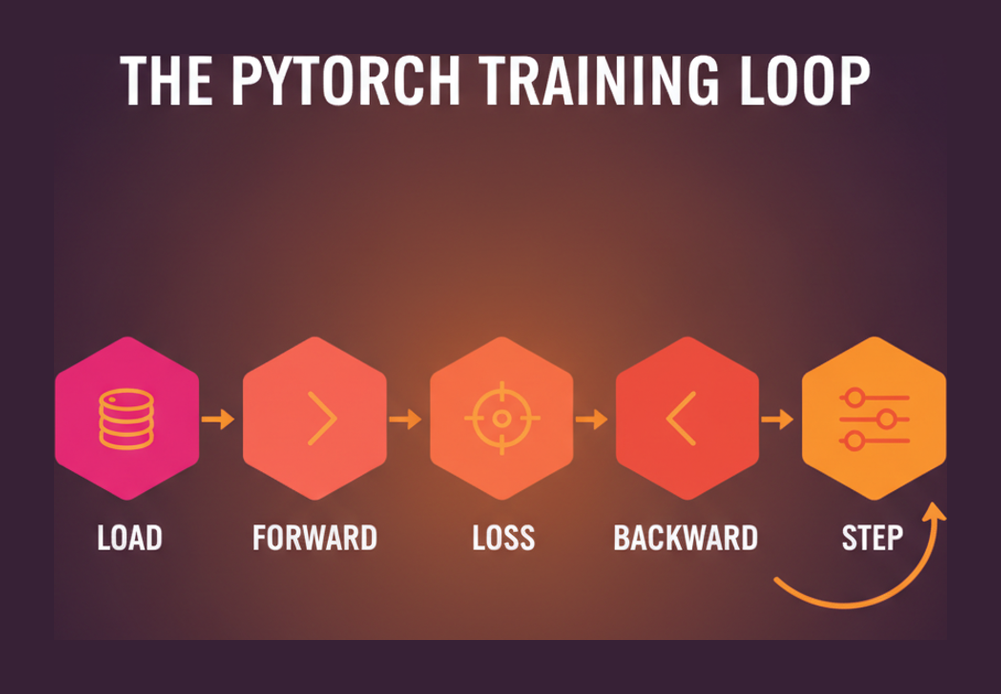
The training and testing objectives cover the loop itself: forward pass, loss, backward pass, optimiser step, and switching between training and evaluation modes. Knowing why evaluation mode changes behaviour, rather than just remembering to call it, is the level the domain works at.
What Does the Performance and Optimization Domain Test?
Performance and optimisation carries 26% of PTCA and covers three areas: precision and execution optimisation, performance measurement, and distributed training. Its size relative to model development is the clearest statement of the exam’s philosophy, which is that running models well matters as much as designing them.
Precision is the first pillar. Reduced-precision training is now standard practice rather than an optimisation of last resort, and the exam expects you to understand the trade-off rather than to recite a flag. Execution optimisation covers how PyTorch compiles and executes graphs, and why the same model can run at very different speeds without any change to its architecture.
Measurement and distribution
Performance measurement is the objective most easily neglected and most easily learned. Knowing how to time PyTorch code correctly, and why naive timing on an accelerator is misleading because work is queued asynchronously, is a small body of knowledge with a high probability of appearing.
Distributed training rounds out the domain. At associate level this is conceptual rather than operational: what changes when a model trains across several devices, how data and gradients move, and what that costs. The PyTorch documentation is the right depth for all three areas.
How Much Model Building Does the Exam Actually Ask For?
Less than most candidates expect. Model development is 20% of PTCA and its stated scope is a single objective: PyTorch neural network building blocks. Data handling adds 16%, covering datasets, DataLoaders, transforms and training data. Together they are just over a third of the paper.
The narrow model development scope is deliberate. This is an associate credential for the framework, not a machine learning theory exam, so it asks whether you know what the framework’s building blocks are and how they compose, not whether you can choose an architecture for a research problem. Modules, layers, parameters and how a model is assembled from them is the level.
Data handling is where the practical marks are
The data domain is small but concrete, and it is the easiest to prepare for because every objective maps onto something you can run. Datasets and DataLoaders are the two abstractions worth understanding properly: what a Dataset is responsible for, what a DataLoader adds on top in batching, shuffling and parallel loading, and where transforms sit in that chain.
Candidates who have only ever used a prepared dataset from a tutorial tend to lose marks here, because they have never had to write the pieces themselves. Writing one small custom Dataset closes most of the gap.
Who Is the PyTorch Certification Actually For?
PTCA serves people who already write PyTorch and want a defensible way to say so. Machine learning engineers, data scientists moving into engineering work, researchers who need a credential for a role change, and platform engineers supporting ML teams all get something from it. It is not a route into machine learning from a standing start, despite having no prerequisites.
The framework’s position makes the credential more useful than it would otherwise be. PyTorch dominates research and has spread widely into production, and independent evidence of that adoption is available in the Stack Overflow Developer Survey rather than only in vendor claims.
Being honest about the limits
A multiple-choice exam cannot prove you can build, train and debug a model under real conditions. Treat PTCA as evidence that your framework fundamentals are sound, not as a substitute for a portfolio. Its most credible use is alongside work you can show, and its least credible use is in place of any.
For candidates weighing it against other Linux Foundation associate credentials, this Prometheus Associate topic breakdown shows how a comparable associate exam is structured.
How Should You Prepare for PTCA?
PTCA preparation should follow the weighting and should be done at a keyboard even though the exam is written. Three to six weeks is realistic for someone already using PyTorch. The sequence below spends most of its time in the two domains that carry 64% of the marks.
- Start with tensors and spend longer there than feels necessary, working through shape, dtype, broadcasting, views versus copies and in-place operations until you can predict the result before running the cell.
- Move to device basics next, deliberately moving tensors and modules between CPU and an accelerator and triggering a device mismatch on purpose so the error message becomes familiar rather than alarming.
- Write a full training and evaluation loop by hand without a framework wrapper, so the forward pass, loss, backward pass, optimiser step and mode switching are yours rather than borrowed.
- Work through the performance material by measuring something real, timing a model correctly, changing precision, and observing what actually moves rather than reading about what should.
- Write one small custom Dataset and wrap it in a DataLoader, adding a transform, which covers most of the data handling domain in a single afternoon.
- Read the official documentation for the neural network building blocks last, since model development is only 20% and is the domain where reading is a reasonable substitute for practice.
- Finish with timed practice at two minutes per question, checking every wrong answer against the domain it came from so the 38% and 26% domains get any remaining time.
What to study from
The official documentation is the primary source, and the framework’s own repository is worth having open alongside it when a behaviour is unclear. Reading the actual implementation in the PyTorch project repository settles questions that documentation phrasing leaves ambiguous.
Frequently Asked Questions
How many questions are on the PTCA exam?
The exam has 60 questions with a 120 minute limit, which allows two minutes each. That is generous for a multiple-choice paper, so the constraint is knowledge rather than pace.
What score do you need to pass the PyTorch certification?
You need 75%. On a 60 question paper that means 45 correct answers, so you can afford to lose 15, which is roughly the size of the entire data handling domain.
Is the PTCA exam hands-on?
No. It is an online proctored, multiple-choice exam rather than a performance-based one. That differs from the Linux Foundation’s Kubernetes exams, which is the assumption most candidates arrive with.
How much does the PyTorch certification cost?
The exam alone is $250 USD. A bundle with the foundation’s annual subscription is offered at a higher price, so compare the two before booking if you intend to take further exams.
Does the PTCA exam fee include a retake?
Yes. The Linux Foundation lists one retake with the exam purchase, along with 12 months of exam eligibility from the date you buy it. That gives a full year to schedule the first sitting and, if needed, the second.
Are there prerequisites for PTCA?
None are published, so anyone may register. The blueprint does assume working familiarity with PyTorch code, which is a practical bar even though it is not a booking requirement.
Which PTCA domain carries the most weight?
PyTorch Fundamentals at 38%, followed by Performance and Optimization at 26%. Model Development is 20% and Data Handling 16%, so foundational material outweighs model building by a wide margin.
How long is the PyTorch certification valid?
Two years. Renewal means sitting the version of the exam current at that point, which keeps the credential aligned with a framework that changes quickly.
Do you need a GPU to prepare for PTCA?
Not strictly, but access to one helps with the device and performance objectives. Those domains are far easier to internalise when you can watch precision and placement change real behaviour.
Does PTCA cover TensorFlow or other frameworks?
No. Every objective is PyTorch specific, covering tensors, devices, building blocks, data loading and performance within that framework alone.
Is PTCA worth it for an experienced engineer?
It is worth it as verifiable evidence of framework fundamentals, particularly for role changes or contract work. It does not replace a portfolio, because a written exam cannot show that you build and debug models well.
Conclusion
PTCA is a framework exam, not a machine learning theory exam, and its weighting says so plainly. Fundamentals and performance take 64% of the paper between them, while the architecture work most people associate with deep learning accounts for a fifth.
That makes preparation unusually concrete. Spend your time on tensors, device placement, the training loop written by hand, and measuring performance properly. Write one custom Dataset. Read the neural network material last, and go in knowing this is a written paper rather than a lab, so the value it carries is precision about fundamentals rather than proof that you can ship a model.


